
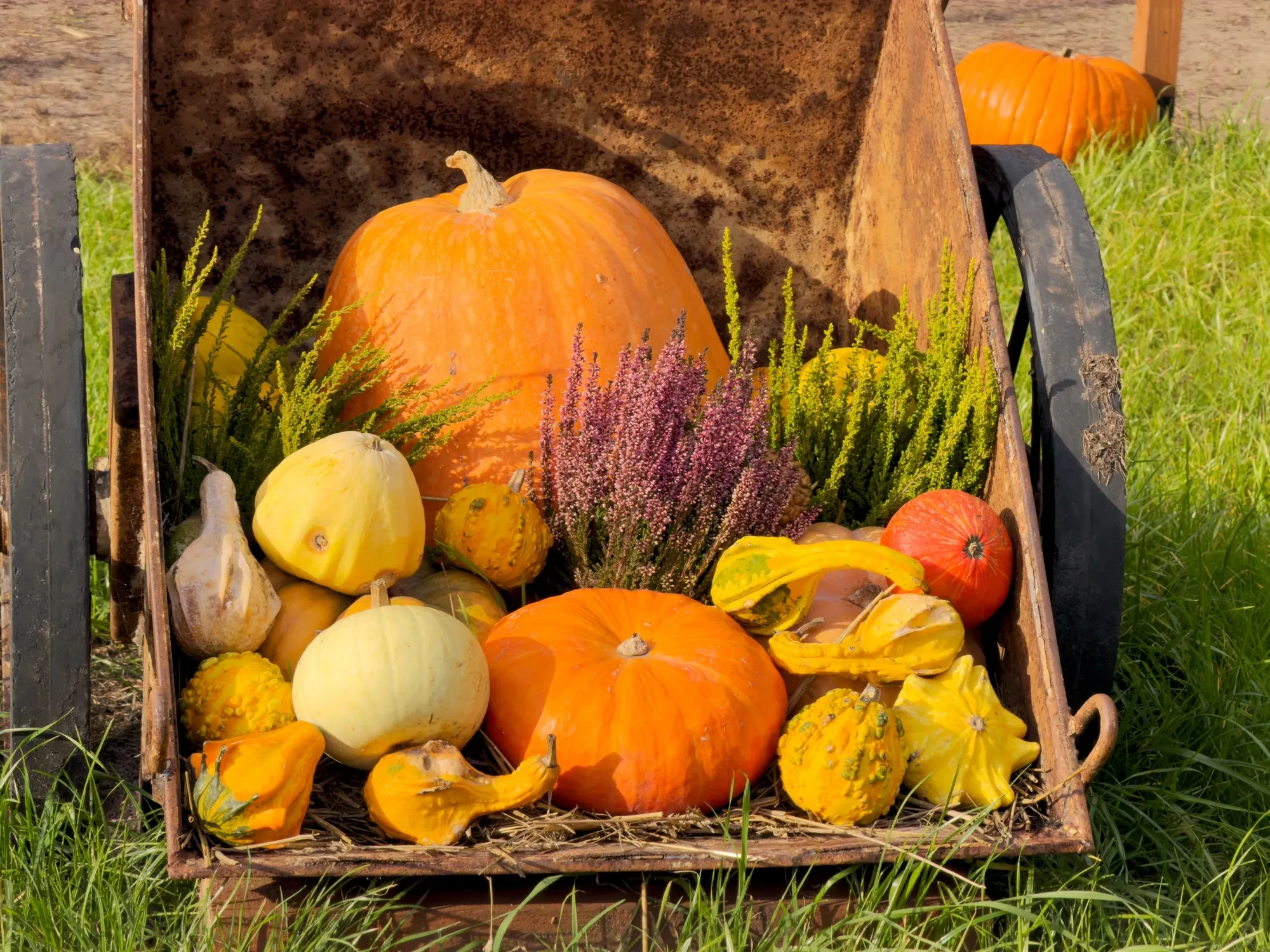
There is much to know about pumpkins
Every fall stores sell pumpkins, but only for a very limited time. Savvy home cooks seize the opportunity to stock up and make pumpkin puree to be used throughout the year in desserts and main dishes.
The Facts
- Pumpkin is highly nutritious
- Whole pumpkins cost almost nothing in the fall
- Pumpkin puree is very easy to make at home
- Frozen puree lasts until the next pumpkin season
Pumpkin is highly nutritious
Pumpkin is considered a very nutritious and nutrient-dense food, because it delivers a high amount of vitamins, minerals, and fiber for a very low calorie count.
- The pumpkin flesh contains vitamin A and beta-carotene, vitamin C, potassium, iron, magnesium, and the antioxidants lutein and zeaxanthin
- It also provides both soluble and insoluble fiber
- Pumpkin seeds are packed with plant-based protein, omega-6 and omega-3 fatty acids, magnesium, and zinc
Pumpkin is incredibly cheap
This fall, 3 pumpkins cost a total of $10.50 and yielded about 40 pounds of pumpkin puree. Compared to buying canned pumpkin at the same store, here is the math:
- Canned pumpkin costs $2.86 per pound for the store brand and $3.86 for the name brand
- Home-made pumpkin puree comes in at $0.26 per pound.
- This saves $104 to $144 for relatively little effort!
The savings could come closer to $200 with bigger pumpkins at the same price, but there is only so much pumpkin puree a family needs in one year. Actually, very few households currently use 40 pounds or more of canned pumpkin puree in a year. But when it is readily available, it’s easy to add it to a wide variety of dishes and amp up the nutrition for almost no cost at all!
The real savings from stocking a lot of home-made pumpkin puree come from not having to buy more expensive produce to get the same nutrition. In terms of vitamins and minerals, butternut squash, acorn squash, sweet potatoes, and carrots provide similar benefits, but at a higher price per pound:.
- Home-made pumpkin puree: $0.26
- Fresh butternut squash: $0.97
- Carrots: $1.32
- Acorn squash: $1.50
- Sweet potatoes: $1.99
- Frozen butternut squash: $3.04
Frozen butternut squash is the most similar to home-made pumpkin puree, but it comes in at 11 times the price!
Pumpkin puree is easy to make at home and freeze
Making pumpkin puree at home does not require more than a knife, a scraper, a potato masher, a cookie sheet, and an oven. The steps are simple and are illustrated by allrecipes.
- Cut a small to medium-sized pumpkin in half
- Scrape out the strings and seeds
- Cover the halves with foil and place them foil-side up on cookie sheets
- Bake in the oven anywhere from 325°F to 400°F until soft, with the lower temperature being better for large pumpkins and more even cooking
Once the pumpkin has cooled a bit it’s ready to be mashed, portioned, and frozen:
- Scrape the flesh out of the skin, or simply peel the skin off the flesh
- Mash the flesh with a potato masher
- Fill freezer bags with individual portions of puree
- Squeeze out any air
- Freeze smaller portions in ice-cube trays
- Freeze for up to a year
Tip: To use up the least amount of space in the freezer, the bags should be fairly flat and stack like books.
Pumpkin is a very versatile ingredient
Pumpkin puree on its own is rather watery. While this makes it a good ingredient for soup, pumpkin pie, or pumpkin bread, it does not work very well as a side dish. But because of its mild flavour, it is easy to 'hide' pumpkin puree in many other recipes. Here are a few easy ones:
- Tomato sauce or spaghetti Bolognese
- Chilis
- Stews
- Curries
- Mac and cheese
- Meat loaf and meat balls
- Muffins, cakes, and quick bread